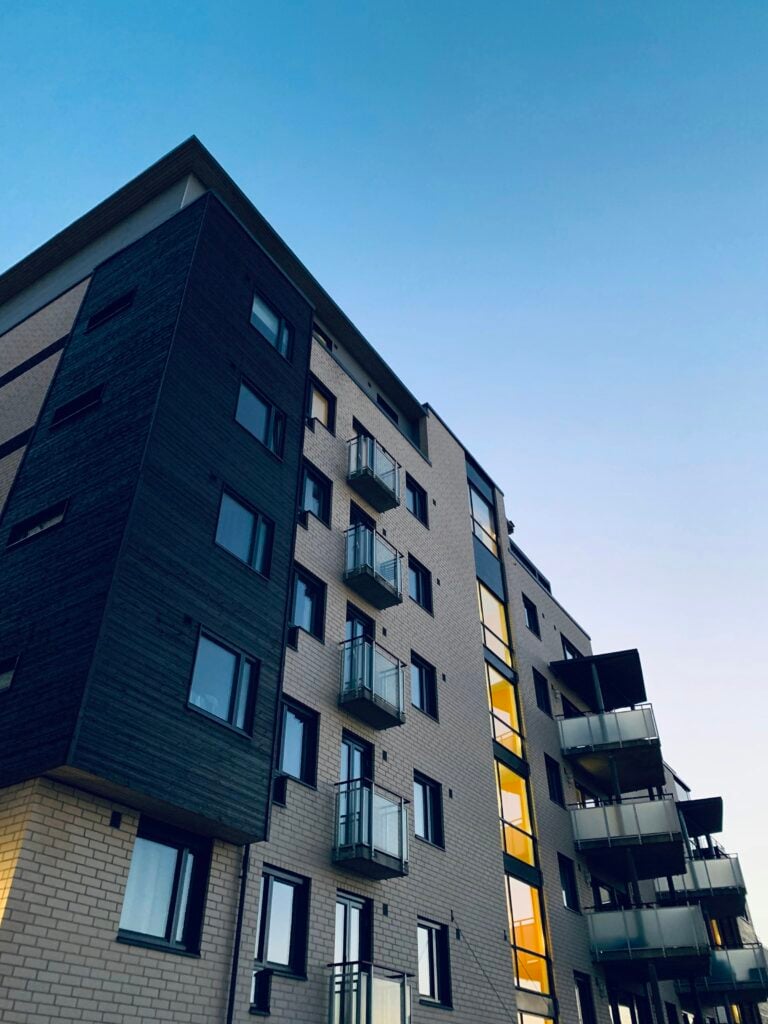
If you are scouting San Isidro from Miami, Madrid, or Mexico City and looking for that sweet spot between premium location and reasonable entry ticket, Corpac belongs on your shortlist. Living in Corpac San Isidro means owning real estate inside Peru’s most exclusive district, but in a quiet, tree-lined micro-neighborhood that still trades 12% to 20% below the El Golf ceiling. Picture a Coral Gables-style residential pocket grafted onto Brickell’s financial core: walkable streets, low-rise apartment buildings, and direct access to Lima’s main expressway. Here is what every Spanish-speaking US-based investor should know before pulling the trigger.
Table of contents
- Where the Corpac name comes from: Lima’s first international airport
- Location and boundaries inside San Isidro
- Resident profile: who lives in Corpac today
- Real estate prices and 2026 market data
- Connectivity: Javier Prado, Vía Expresa, and the financial center
- Parks, green areas, and neighborhood life
- What to check before buying in Corpac
- Frequently asked questions
Where the Corpac name comes from: Lima’s first international airport
The Corpac name comes from Corporación Peruana de Aeropuertos y Aviación Comercial, the state-owned company that ran Lima’s old Limatambo International Airport from 1935 until January 1964. When Jorge Chávez International took over in Callao, the Limatambo land was progressively developed and turned into the urban grid you walk through today. That is why Corpac’s avenues feel unusually wide and orthogonal compared to the rest of Lima: those long straight blocks are the literal footprint of former runways and taxiways.
This origin story explains why Corpac feels different from the rest of San Isidro. While El Olivar represents the colonial-residential face of the district and El Golf concentrates the most visible luxury around Lima Golf Club, Corpac is the mid-century-modern pocket: blocks built out in the seventies and eighties, apartment buildings designed for finance professionals and diplomats, and a much lower density than the Javier Prado corridor. Think of it as the equivalent of a low-rise residential enclave inside an otherwise high-rise central business district. For broader context, browse our pillar guide on reasons to live in San Isidro.
Location and boundaries inside San Isidro
Corpac sits in the northeastern quadrant of San Isidro, framed by Av. Javier Prado Este to the south, Av. Aurelio Miró Quesada to the west, and the San Borja border to the east. Its two signature internal arteries are Av. del Parque Norte and Av. del Parque Sur, parallel streets that organize the neighborhood into a regular grid. Other notable streets include Las Camelias, Las Flores, and the residential stretch of Las Begonias.
You are roughly a ten-minute walk from the financial center, but the atmosphere shifts entirely: fewer corporate towers, more six- to twelve-story apartment buildings, internal gardens, generous setbacks, and quiet sidewalks where you actually walk without dodging cars. Versus other San Isidro micro-neighborhoods, Corpac plays in the same residential league as Orrantia and is a five-minute drive from Country Club, but with a more domestic profile and a higher share of buildings constructed in the past two decades.
Resident profile: who lives in Corpac today
The dominant resident profile includes established professional families, financial-center executives who prefer to walk to the office, senior professionals with school-age children, and a growing share of younger professionals priced out of El Golf. You will also see diplomatic residences and representation offices, a legacy of the embassy cluster that historically settled along the Javier Prado axis.
Typical inventory ranges from 90 sqm to 220 sqm apartments with three or four bedrooms, two parking spots, and a storage unit. Buildings are low-density: eight to fourteen units per tower, direct elevator-to-unit access in newer projects, and amenities focused on rooftop terraces, gyms, and (in the newest builds) coworking lounges. Studios and compact one-bedroom flats are scarce, which keeps the neighborhood oriented toward stable residents rather than high-turnover tenants. For a US comparable, Corpac feels closer to a Coral Gables single-block boutique condo than to a downtown Brickell tower.
Real estate prices and 2026 market data
Living in Corpac San Isidro means buying into one of Peru’s most coveted ZIP codes, but at a meaningful discount versus the district ceiling. According to the Urbania Index for April 2026, San Isidro averages S/ 9,268/sqm (~USD 2,440/sqm) and the San Isidro Sur subsector (which includes El Golf) reaches S/ 11,947/sqm (~USD 3,150/sqm). Corpac, as a residential pocket without premium retail frontage or golf-course views, trades in an estimated range of USD 2,240/sqm to USD 2,770/sqm (S/ 8,500 to S/ 10,500) depending on building age, view, finishes, and parking ratio.
Concrete benchmark: a 120 sqm three-bedroom apartment with two parking spots on Av. del Parque Sur lists between USD 290,000 and USD 370,000 (S/ 1.1M to S/ 1.4M). A duplex with terrace can clear USD 420,000 (S/ 1.6M). A 200+ sqm boutique unit with premium amenities can reach USD 580,000 (S/ 2.2M). For the full district picture, read our deep-dive on San Isidro price per sqm 2026 and the broader market view in Lima Top price per sqm 2026.
The investment case for Corpac is straightforward: pricing is 12% to 20% below El Golf, with sustained appreciation because new supply is constrained. San Isidro’s municipal zoning caps height and density, so usable land is scarce and turnover is low. Official data from the Central Reserve Bank of Peru on price per sqm confirms the moderate uptrend across Lima Top, consistent with the figures published by Urbania for the San Isidro district. Compared to Brickell or Aventura on a per-sqm basis, Corpac offers similar walkability with a substantially lower entry ticket. Compared with secondary markets in Latin America, Lima Top remains structurally undersupplied at the high end, and Corpac is one of the few pockets where you can still find a recently renovated three-bedroom unit under USD 400,000 with strong walk-to-work credentials.
Connectivity: Javier Prado, Vía Expresa, and the financial center
Corpac’s biggest practical advantage is connectivity. Av. Javier Prado Este runs three or four blocks from the heart of the neighborhood, linking you directly to La Molina, San Borja, San Luis, and (via the bypass) the northern half of the city. The Vía Expresa Paseo de la República, Lima’s signature signal-free expressway, is a sub-ten-minute drive away and takes you to Miraflores, Barranco, and downtown Lima without traffic lights, which in this city is a real luxury.
For public transit, the Canaval y Moreyra Metropolitano station is a fifteen-minute walk and connects you to the north-south BRT corridor. The future expansion of Lima Metro Line 2 will add stations along Av. Arequipa, also accessible from Corpac. If your office is in the financial center along Camino Real, Rivera Navarrete, or Las Begonias, you can walk there in under twenty minutes. Average ride-share times to Miraflores run twelve minutes off-peak and up to twenty-five minutes during rush hour.
Parks, green areas, and neighborhood life
Av. del Parque Norte and Av. del Parque Sur are not named that way by accident. The neighborhood is organized around small green spaces with benches, playgrounds, and mature canopy trees, including ficus, palm, and jacaranda that turn the streets violet in spring. Corpac is one of the few San Isidro pockets where you will see neighbors walking dogs at 7 PM, kids on bikes on weekends, and seniors doing morning walks without feeling boxed in by traffic.
El Olivar Park, the district’s iconic 17th-century olive grove and historical landmark, is a ten-minute walk southwest. To understand why this green lung sets the tone for the entire district, read our guide to living in El Olivar San Isidro. For day-to-day services you have Wong supermarkets, Plaza Vea, premium bakeries (La Baguette, Antojitos), specialty coffee shops, boutique gyms, and Clínica Ricardo Palma a few minutes away. The top private bilingual schools (Markham, Newton, San Silvestre) are all fifteen to twenty minutes by car, which is a deciding factor for relocating expat families. Many of the originally diplomatic-owned mid-block buildings are now selling on the resale market, often with full renovations and modernized amenities, which creates an interesting opportunity window for buyers who can move quickly with cash or pre-approved financing.
What to check before buying in Corpac
If you are buying in Corpac, three checks matter most. First, building age: many towers date from the seventies and eighties, structurally sound but with utilities (electrical, plumbing, acoustic insulation, elevators) that deserve a professional inspection. Second, view and orientation: units facing Av. del Parque carry up to an 8% premium over interior units and resell faster. Third, parking ratio: in two-car households, buildings with two parking spots per unit hold value better than one-spot stock.
On financing, current Peruvian mortgage rates from BCP, BBVA, Scotiabank, and Interbank are running between 7.40% and 8.60% effective annual in soles for non-social housing through 2026. As a foreign buyer, you can either pay cash, finance with a Peruvian bank (requiring local income or a Peruvian guarantor), or finance abroad and remit funds. Rent-to-price ratio in Corpac runs around 0.4% to 0.5% per month on sale value, in line with the Lima Top average. Before closing, also review our checklist for buying an apartment in San Isidro for documentation and legal due-diligence steps.
Frequently asked questions
How safe is living in Corpac San Isidro?
Corpac ranks among the safest micro-neighborhoods in Lima Top, with constant San Isidro Serenazgo presence, municipal CCTV, and motorized patrols. Low residential density and controlled vehicle flow reinforce the sense of calm versus other parts of the district.
What is the average price per sqm for living in Corpac San Isidro?
The estimated 2026 range runs USD 2,240 to USD 2,770 per sqm (S/ 8,500 to S/ 10,500) depending on building and view. The full San Isidro district averages USD 2,440/sqm (S/ 9,268) as of April 2026, with San Isidro Sur reaching USD 3,150/sqm (S/ 11,947).
Is Corpac a good neighborhood for real estate investment?
Yes, especially for investors prioritizing capital appreciation over immediate cash flow. New supply is constrained, residential demand is sustained, and the price per sqm sits 12% to 20% below El Golf, leaving runway for medium-term appreciation.
What apartment types dominate in Corpac?
Apartments of 90 sqm to 220 sqm with three or four bedrooms, two parking spots, and a storage unit dominate the inventory. Buildings are low-density (eight to fourteen units per tower) and studios are scarce.
How well connected is Corpac to the rest of Lima?
Excellent. Av. Javier Prado links you to La Molina, San Borja, and the northern bypass. The Vía Expresa Paseo de la República is ten minutes away. Canaval y Moreyra Metropolitano station is a fifteen-minute walk and the future Metro Line 2 will be accessible via Av. Arequipa.
Are there parks and green areas in Corpac?
Yes. Av. del Parque Norte and Av. del Parque Sur structure the neighborhood around small green spaces. El Olivar Park, the district’s historical landmark, is a ten-minute walk southwest.
The bottom line on choosing Corpac
Corpac gives you Peru’s most coveted ZIP code with a calmer profile and a more accessible ticket. If your priority is owning in San Isidro, walking to the financial center, having a park around the corner, and maintaining privacy, this micro-neighborhood deserves serious consideration. The mix of low density, superior connectivity, and still-reasonable price per sqm positions Corpac as one of Lima Top’s better medium-term plays, especially for buyers who value tranquility without sacrificing centrality. If you need personalized guidance to tour Corpac apartments or compare options against other sub-neighborhoods, Penthouse curates premium properties across all of Lima Top and can help you filter the inventory by your criteria.
Disclaimer: Pricing, mortgage rate, and ratio figures cited in this article come from public sources (BCRP, Urbania Index, ASEI) updated to April 2026 and are referential. They do not constitute financial or investment advice. Each real estate transaction should be evaluated case by case with the support of a qualified advisor. Note that property tax (impuesto predial) and arbitrios in San Isidro are among the highest in Lima but remain modest compared to typical US property taxes, which is a positive structural feature for non-resident owners.