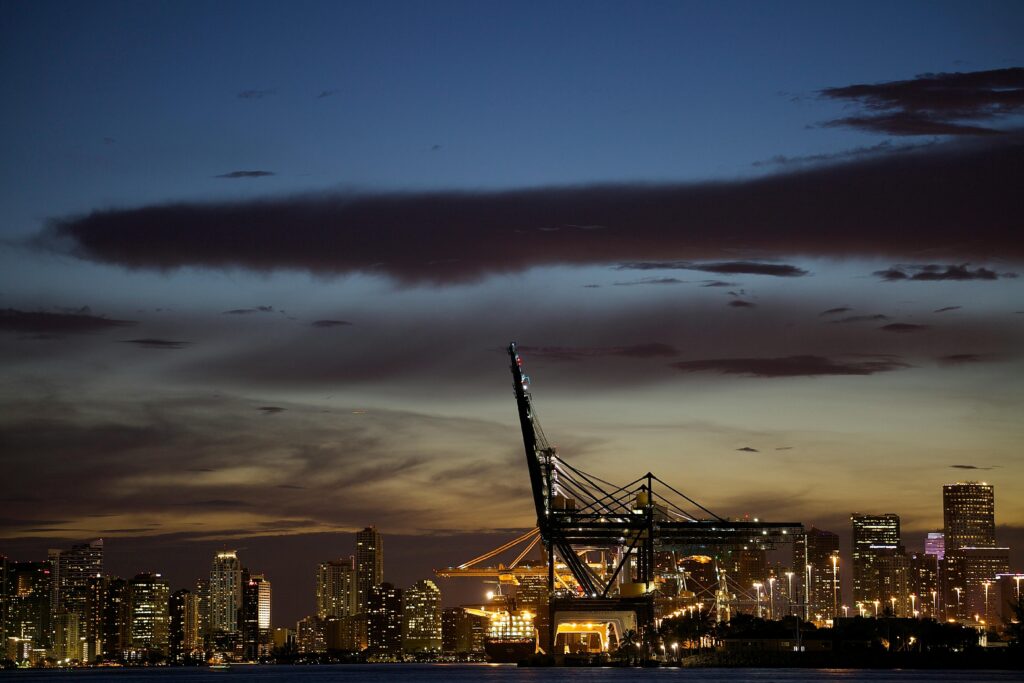
Stop on the twelfth block of Malecón Cisneros, look west, and the horizon does what almost no other corner of Lima allows: it empties out. No buildings, no highways — just the cliff line, the linear oceanfront park, and then the Pacific. On that exact block — Mal. Cisneros 1220 — Tale Inmobiliaria is delivering The Wave, a fifteen-unit boutique building designed by Nómena Arquitectos, scheduled for handover in November 2026 with starting prices from S/904,020 (about USD 245,000). For the Hispanic-American or expat investor used to Brickell pricing, this article walks through what the project actually offers, how it stacks up against Miraflores’ average of S/12,000/m² oceanfront, and the LEED case for paying premium on Lima’s cliff.
Table of contents
- Location: the twelfth block of Malecón Cisneros
- Developer and team: Tale Inmobiliaria + Nómena
- Architecture: the frozen wave
- Units, areas and pricing
- Sustainability and LEED certification
- Amenities and daily life
- How it stacks up in Miraflores 2026
- For the buyer-investor
- Quick facts
- Frequently asked questions
Location: the twelfth block of Malecón Cisneros
The Wave Miraflores Montecatini — the search-engine alias the project carries even though the actual developer is Tale Inmobiliaria, not Montecatini — sits at Mal. Cisneros 1220, on the twelfth block of the cliff-top boulevard that runs from Pardo to Armendáriz. This particular block is one of Miraflores’ top-tier addresses: the linear park and bike path on one side, the unobstructed Pacific in front, and Larcomar plus Parque Kennedy at three minutes’ walk. Drive time to Jorge Chávez International via the Costa Verde freeway runs about twenty-two minutes in normal traffic — relevant for the buyer-investor who flies regularly between Lima and the United States.
Malecón Cisneros, together with Armendáriz and de la Reserva, forms Miraflores’ premium oceanfront axis. Urbania records new units with direct Pacific views trading between S/12,000 and S/14,000/m² (roughly USD 3,250 to USD 3,800/m²), while Miraflores closed 2025 at S/9,850/m² average per the Urbania Index. The Wave enters that axis at S/904,020 (USD 245,000) for its compact units — a number worth comparing against the same block’s secondary inventory and against comparable in-plan projects.
If you buy with rental income in mind, the relevant data point is absorption velocity: ASEI reports monthly primary-market absorption of about 4.5 percent in Miraflores, against 3.8 percent average for Lima Top. If you buy to live, the indicator shifts — pedestrian density on the boardwalk, distance to international schools, vehicular flow on the parallel avenue — and that calculation tilts toward block twelve, where Cisneros traffic feels more residential than it does on the Pardo-adjacent stretches. For a district-by-district price overview, see our Lima Top 2026 price-per-square-meter guide.
Developer and team: Tale Inmobiliaria + Nómena
One clarification matters here because the data circulates with an error. The Wave is developed by Tale Inmobiliaria, a Lima-based firm with a focused portfolio of boutique buildings in Miraflores and San Isidro. Montecatini — Grupo Inmobiliario Montecatini — operates a separate building in Miraflores, on Avenida Roca y Boloña 271, also LEED-certified and with delivery scheduled for January 2026. Different projects, different developers, both active. If you searched for “The Wave Miraflores Montecatini,” the building you actually want to look at commercially is the Tale project at Mal. Cisneros 1220.
The architecture studio is Nómena, a Miraflores-based firm that has signed several of the district’s most visible sustainable projects over the past three years. Nómena also designed Borgoño 1135 (LEED-certified for Inversiones Palomar) and Pardo 664 (Morada’s first LEED building after three previous EDGE certifications). That track record matters: a buyer paying premium for a Malecón Cisneros address is also paying for the assumption that the building envelope will hold up against salt and humidity — the two classic enemies of cliff-front construction in Lima.
Tale Inmobiliaria’s portfolio focuses on small-scale, Miraflores-centric projects. The commercial promise is exclusivity through density: with fifteen apartments across nine floors and two basement levels, The Wave runs deliberately low on shared circulation. For the trade-up buyer — the one who sold a larger flat in San Isidro or Surco and wants fewer neighbors, not more — that fifteen-unit count is the headline argument.
Architecture: the frozen wave
The facade of The Wave Miraflores is organized around a horizontal motion that sweeps across the Malecón Cisneros front, with recessed openings and slabs that step in and out floor by floor. The metaphor is direct — a wave caught mid-break in concrete — and the execution targets the classic problem of flat oceanfront facades: accelerated weathering from salt-laden sea breeze across homogeneous surfaces. The folded planes act as solar shading and, simultaneously, distribute runoff to reduce streaking.
The building rises nine floors above grade with two basement parking levels, holding fifteen apartments that combine flats and duplexes. Declared areas run from 80 m² (about 860 sq ft) to 158 m² (about 1,700 sq ft), with one-, two-, and three-bedroom layouts. The setbacks generate stepped terraces on the upper floors — the detail that drives the largest price differentials once you climb above the sixth floor — and produce different readings of the Pacific depending on which level you buy on. From mid-building up, the sightline clears the canopy of the linear park’s pine trees.
The exterior carpentry features double-pane windows that address two requirements at once: acoustic insulation (Malecón Cisneros has steady traffic — bikes, runners, cars) and thermal efficiency for the LEED scorecard. For more on Miraflores oceanfront premiums, see our coverage of Lima’s most exclusive districts and the Miraflores 2026 price-per-square-meter guide, which explains why the seafront premium holds even in slower absorption years.
Units, areas and pricing
The fifteen units of The Wave Miraflores split between flats and duplexes, with areas from 80 m² to 158 m² and one-, two-, and three-bedroom typologies. Public starting price is USD 245,000 (S/904,020) per Nexo Inmobiliario, putting the entry ticket at roughly USD 3,060/m² — modestly below the USD 3,250/m² average that Urbania reports for new oceanfront units along Malecón Cisneros. Compare that to Brickell’s USD 800-1,100/sq ft (approximately USD 8,600-11,800/m²) for new construction, and the Lima cliff-front delivers far more dollar-for-dollar surface.
Pricing rises noticeably as you climb in floor and orientation. The high units with direct Pacific frontage and stepped terraces sit in a different bracket and need to be quoted unit by unit with the sales team; the project’s full price list is not openly published, and the spread between an 80 m² flat and a 158 m² duplex is not linear. The commercial pattern, as far as the public listings show, follows the Tale playbook: visible entry ticket, then bespoke pricing for premium typologies.
For financing, note that the Peruvian banking system closed 2025 with an average mortgage rate of 7.74 percent annual on twenty-year sol-denominated loans, projected toward 7.3-7.5 percent in 2026 if the central bank continues its rate-cutting cycle. Mortgage credit grew 7.1 percent year-over-year in February 2026 per BCRP. If you are buying from abroad, the mechanics differ — cash purchase, financing from your country of residence, or a hybrid structure — and our premium buying process for foreign buyers walks through the standard flows.
Sustainability and LEED certification
The Wave is positioned as a LEED-certified building, in line with Nómena Arquitectos’ track record on Borgoño 1135, Pardo 664, and other recent Miraflores commissions. The exact tier — Certified, Silver, Gold, or Platinum — is not openly published by the developer at the time of this article, so buyers should confirm directly with the sales team before signing a reservation. What is documented is the project’s commitment to controlled cross-ventilation, high-performance glazing, low-flow plumbing fixtures, and LED lighting in common areas.
Why does LEED matter on a Malecón purchase? Three technical reasons. First, measurable operating savings: a LEED Silver or higher building reports between 18 and 30 percent less electricity consumption than a comparable conventional structure, per data published by USGBC. Second, facade and carpentry durability: certification requires materials tested against humidity and salinity, which translates on the cliff into fewer ten- and fifteen-year repair cycles. Third, resale value: aggregated reports from Architizer and ASEI show certified buildings hold price better through market corrections.
For the financially-minded buyer, the math is simple. If your unit consumes 18 percent less electricity and water than a neighboring conventional building, on an average annual utility cost of S/9,500, that is S/1,700 saved per year — and that excludes proportional savings on maintenance. Over fifteen years, the nominal figure runs S/25,500 that stays in your account. For a deeper read on when the LEED premium pays off, see our piece on key features of luxury apartments in Miraflores.
Amenities and daily life
The amenity program at The Wave Miraflores is sized for fifteen households, not two hundred, and that changes the math. You get a double-height modern lobby, a game room, a central courtyard with landscaped terrace, a fully-equipped fitness area, a coworking room with dedicated Wi-Fi, two independent grill stations, and an outdoor pool oriented toward the boardwalk. The amenity-density ratio is the hidden metric worth checking: with fifteen units the pool-to-resident ratio drops to about 2.5 people per theoretical user, against 8 to 12 in forty-unit towers.
Apartments come with built-in kitchen cabinetry, separate laundry rooms, kitchenettes where applicable, natural gas connections, and an open-plan kitchen as the base scheme. Parking is in-line — not stacked — with assigned storage, a detail that frequent district buyers value because it eliminates the typical conflict around tandem spaces in small buildings. The number of parking spaces per unit varies by typology and should be confirmed with the sales team for any unit under consideration.
The Wave places lobby and amenities on the lower floors to free the upper levels for purely residential use. That decision differentiates the product from the denser towers on Pardo or 28 de Julio, where coworking spaces typically generate external visitor traffic. For more on Miraflores neighborhood comparisons, see our Miraflores district hub.
How it stacks up in Miraflores 2026
The Miraflores 2026 market opens with three key data points: a S/9,850/m² average price (Urbania Index, +4.8 percent year-over-year), monthly primary absorption of 4.5 percent (ASEI), and supply concentrated in fifteen- to ninety-unit boutique projects. The Wave plays in the upper end of that concentration: oceanfront location and an entry ticket that does not force the buyer to stack view, area, and certification simultaneously — which is precisely what happens further south on Malecón de la Reserva, where prices touch S/14,000/m².
Compared to neighboring inventory, The Wave enters with three measurable differentiators. First, low density: fifteen units is half or less than the Malecón Cisneros primary-market average, per Urbania’s listings for the area. Second, the Nómena architecture bet, which has track record of facades that age well facing the Pacific. Third, the entry price: S/904,020 sits below the starting tickets of several comparable projects on the same axis, although that compact unit pulls a higher per-square-meter premium when you scale up to the 158 m² duplex.
For the buyer-investor, the rental math sustains the ticket. An 80 m² unit on Malecón Cisneros with a Pacific view rents for S/5,500 to S/6,500 monthly on long-term contracts, per aggregated Urbania and Adondevivir data. On a S/904,020 ticket, that yields a gross 7.3 to 8.6 percent annual return before condo fees and maintenance. Run as managed Airbnb the gross yield rises to 9-11 percent, with the trade-off of active management or a delegated operator. If your read is buy-to-live with optionality on rental, the zone gives you margin.
For the buyer-investor
Four buyer profiles fit this building. First, the Lima Top resident moving up from a larger apartment in San Isidro or Surco who wants qualitative trade-up: less area, better location, permanent Pacific view, LEED. The 80 to 110 m² flats are the natural read. Second, the Hispanic-American buyer based in Miami, Houston, or New York looking for a Lima pied-à-terre with mixed family and rental use. For that profile, the mid-sized two-bedroom flats with Airbnb optionality work well.
Third, the pure investor seeking stable yield in certified primary-market product: oceanfront LEED buildings show less drawdown in cycle corrections per Architizer’s aggregated data. Fourth, the family with school-age children at Carmelitas, Antonio Raimondi, or Markham — that buyer values walkable proximity to the Miraflores education axis and lands on the 158 m² duplex. Each profile reads the same building differently, and the unit selection should follow the read.
If you are coming from abroad, one practical rule: book your visit forty-eight hours in advance to walk the construction site with the technical team, not just sales. The operational difference is meaningful — with the technical lead present, you can confirm carpentry specs, slab status, and progress against schedule. Coordinate via our contact channels or request a technical site visit directly with the Tale team.
Quick facts
- Address: Mal. Cisneros 1220, Miraflores 15074, Lima
- Developer: Tale Inmobiliaria
- Architecture: Nómena Arquitectos
- Floors: 9 above grade + 2 basement
- Units: 15 (flats and duplexes)
- Layouts: 1, 2, and 3 bedrooms
- Areas: 80 m² to 158 m² (about 860 to 1,700 sq ft)
- Starting price: USD 245,000 (S/904,020)
- Delivery: November 2026
- Certification: LEED [TO CONFIRM: exact tier Certified/Silver/Gold]
Final read
The Wave is one of those cases where entry price and address reinforce each other: you pay premium for Malecón Cisneros, yes, but the starting ticket sits modestly below the axis median and the building delivers low density, LEED certification, and Nómena architecture. The question is not whether the zone justifies its price — the market already settled that — but whether fifteen neighbors and a pool with an open horizon are worth more to you than forty neighbors and the same view a few blocks away.
Disclaimer
Information about The Wave is sourced from public records and official communications from the developer as of May 2026. Specifications, pricing, and delivery dates may change. Always confirm current details directly with the project’s sales team.
Want to walk The Wave with a PENTHOUSE advisor? We coordinate guided site visits with the technical team and handle the conversation with Tale Inmobiliaria for you. Contact us here to set up your personalized Malecón Cisneros visit.