Buying a luxury apartment in pre-sale can deliver 15 to 30 percent appreciation between contract signing and delivery. It can also turn into a complicated operation if payment milestones, customization clauses or builder warranties are not properly negotiated in the contract. In Lima’s prime segment, the difference between a successful pre-sale and a bad experience is decided in the first 30 pages of the document, not in the project’s sales office.
This guide covers how to invest in luxury pre-sale property in Lima during 2026: payment schedule, critical milestones, builder warranties, customization rights, and the clauses that distinguish a premium contract from a standard one.
Why premium pre-sale is a different asset class
Standard pre-sale in Lima operates with 8 to 15 percent discounts over delivery price. Premium pre-sale works differently. The prime developer does not compete on price; they compete on exclusivity, customization and quality. Pre-sale discounts in luxury sit in the 5 to 10 percent range, but the real appreciation comes not from the entry discount but from three cumulative factors.
The first is natural appreciation during construction. A project with 24 to 36 months of construction captures Lima’s macro cycle and adds 4 to 8 percent annually to the asset, before any specific market improvement.
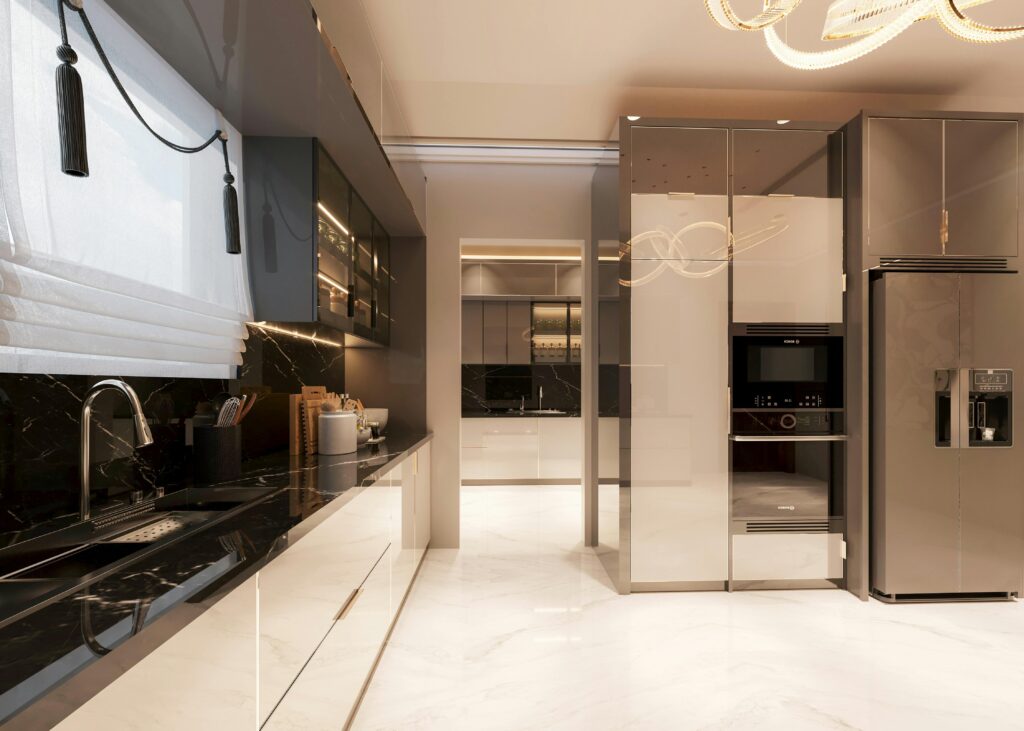
The second is the finish premium. The prime buyer who signs off-plan can customize materials, layout and finishes. An apartment delivered with European oak floors, Italian Calacatta marble and full home automation can increase market value by 8 to 15 percent over the standard unit delivered by the developer.
The third is the scarcity premium. Premium projects in districts like Barranco, San Isidro El Golf or the Miraflores malecón close at 100 percent before delivery. The pre-sale buyer accesses units that, once delivered, are no longer available on the resale market until several years later.
The payment schedule: what changes in luxury
The typical payment structure in standard pre-sale is 10 percent down payment, 20 to 30 percent during construction, and the balance against delivery or bank financing. In the prime segment, the structure tends to be more conservative and better protected for the buyer.
The typical schedule for a premium project breaks down as follows. Ten percent at signing, deposited in an escrow account managed by a financial entity independent of the developer. Five to ten percent upon obtaining the final construction permit (not the preliminary). Ten to fifteen percent at 30 percent structural progress certified by external supervision. Fifteen to twenty percent at 70 percent progress. The remaining balance (50 to 60 percent) against physical delivery, public deed and SUNARP registration.
The HNW buyer should insist on the escrow account. It is the strongest guarantee against developer bankruptcy or construction halt. In serious premium projects, escrow is the standard; if the developer does not offer it, that is a signal to look at another project.
The critical contract clauses
Five clauses distinguish a properly negotiated premium pre-sale contract from a standard one.
Developer delay penalty. The clause should specify economic penalty for each month of delay over 30 to 60 days beyond the contractual delivery date, with a reasonable cap. Typical luxury penalty sits between 0.5 and 1 percent monthly of property value. Without this clause, the buyer absorbs the opportunity cost of the delay without compensation.
Customization rights. The clause should specify what elements the buyer can modify (floor finishes, sanitary fixtures, fittings, kitchen, non-structural layout, home automation) and what cannot be modified (structure, façade, common areas). The schedule for defining customizations should be tied to construction milestones, not absolute dates, to prevent the developer from passing the deadline without releasing decisions.
Finish quality. The contract should include a technical annex with specific brands and models for the main finishes: floors, windows, sanitary fixtures, fittings, kitchen, home automation. Generic descriptions (German top-line kitchen) are insufficient. The technical annex must be signed by both parties and bind the developer to the standard committed in the sales office.
Post-delivery builder warranty. The Peruvian legal standard is five years for structural defects. In the prime segment, additional warranties of three to five years for finishes, electrical and sanitary installations add protection. Some premium developers offer warranties up to ten years for specific elements.
Buyer exit clause. It should contemplate the conditions under which the buyer can rescind the contract without losing more than 10 to 15 percent of contributions. Typical grounds are delay over 12 months, substantial project modification, quality breach. The exit clause is a last resort but it must be there.
Customization: how far it goes and what it costs
Customization is one of the main attractions of premium pre-sale. The buyer can define, within a structured menu set by the developer, the finishes and non-structural layout of the property.
The typical menu includes three levels. The base level, included in the property price, offers standard quality finishes. The mid level, with an additional 5 to 12 percent cost, brings finishes up to premium national or regional brands. The top level, with an additional 12 to 25 percent cost, accesses international brands (Boffi, Gaggenau, Miele, Bulthaup, Antonio Lupi).
Four operating rules of customization. First, define all customizations before 50 percent construction progress; afterward it becomes expensive or impossible. Second, customize for use, not for resale: extreme customizations can shrink the buyer universe in an eventual exit. Third, keep flexibility on non-structural layout but do not improvise; any modification requires technical documentation and, sometimes, municipal observations. Fourth, document each decision in writing with signed plans; the sales office is not the delivery.
Builder warranties: what is covered and what is not
The Peruvian legal structural warranty covers serious construction defects (foundations, columns, beams, slabs) for five years from delivery. It does not cover normal wear, ordinary maintenance, or damage caused by the owner.
In the prime segment, typical additional warranties are as follows. Three to five years for finishes (floors, windows, woodwork). Two to three years for electrical and sanitary installations. One to two years for included appliances. Five to ten years for specialized systems (home automation, HVAC, pool).
The contract must specify the claim procedure. The construction company must respond to requests within defined timeframes (24 to 72 hours for emergencies, 7 to 15 days for scheduled repairs). After-sale service is where the serious developer differs from the one who only sells well.
The signal of a serious developer
Five indicators distinguish the premium developer with track record from one only capitalizing on the segment moment.
Previously delivered projects. A track record of three to five premium projects delivered on time, with current end clients who recommend the developer, is the strongest signal. Visits to delivered buildings should be part of the due diligence process, not optional.
Professional team. Recognized architect, supervisor independent of the developer, attorney specialized in real estate law, commercial manager with prime experience. Team quality shows in the first meeting.
Escrow account and certified progress. The serious developer accepts and proposes escrow account, progress certified by external supervision, and regular publication of the actual construction schedule.
Detailed technical annex. The contract includes a list of brands and models per environment, without vague descriptions. The sales office has physical samples of each finish.
Post-sale service policy. The developer assigns a post-sale lead from delivery and maintains the team during the warranty period. Without a documented post-sale policy, the client is alone after receiving the keys.
The period between contract and delivery
The typical delivery timeline for a premium project in Lima ranges from 22 to 40 months from contract signing. During that period, the HNW buyer must maintain active supervision on three fronts.
Technical supervision. Monthly visits to the construction site during the structural phase, with an architect independent of the developer. Frequency rises to bi-weekly during finishes. Investment in external supervision is 0.5 to 1 percent of property value, and is worth every dollar.
Documentary supervision. Verify each payment milestone corresponds with real certified progress, that municipal permits and licenses stay current, and that there are no substantial changes to the project registered with the municipality.
Financial supervision. If there is partial bank financing, keep the line current with the bank to avoid closing problems. If the operation is cash, schedule international transfers with margin against milestones.
When pre-sale makes sense and when it does not
Premium pre-sale works for three profiles. The investor with five to ten year horizon who captures macro cycle appreciation. The buyer for personal use who values customization over immediate availability. The family office allocating capital to Peruvian real estate and accepting the construction timeline in exchange for better entry.
It does not work for three profiles. The buyer with under-three-year use horizon, where delivery time eats most of the benefit. The investor needing yield from day one who cannot keep capital tied up during construction. The buyer with low tolerance for delay risk or project modifications.
If pre-sale is the option, the practical steps are three. Validate the developer through visits to previously delivered projects and conversations with current owners. Negotiate the five critical contract clauses before signing. And maintain external technical supervision throughout the construction period. The rest is contractual execution.