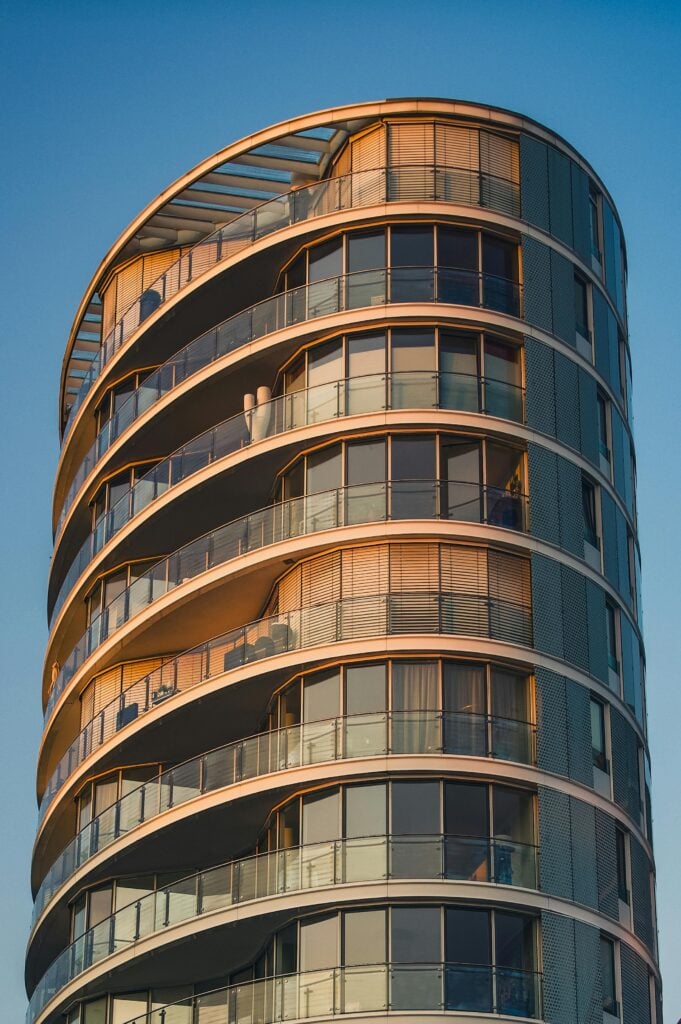
If you’re sitting in Miami, Brickell, or Coral Gables watching 30-year mortgage rates hover near 7% and a Lima penthouse on your radar, here is the local context. In May 2026, Peru’s average mortgage rate in soles for finished housing runs at 7.47% effective annual, according to the rate table published by SBS (Peru’s banking regulator, the local equivalent of the FDIC plus the OCC). In US dollars, the average climbs to 7.84%. The BCRP (Peru’s Federal Reserve) holds its reference rate near 4.25%. Meanwhile in Country Club, the penthouse market in San Isidro is closing at roughly US$3,200 per square meter per Urbania Index Q1 2026, and projects like The Grand at Pezet 195 (Octagon developer) sold over 60% of units in pre-sale. This article ties together three layers most buyers look at separately: Peru’s real estate cycle, mortgage rates by currency, and the specific behavior of the penthouse segment, which moves out of sync with the mass market. By the end you’ll have a concrete playbook for deciding if 2026 is the right time to buy a penthouse in Lima or if waiting six months makes sense.
Table of contents
- Lima’s real estate cycle 2020-2026 through ASEI/CODIP data
- Mortgage rates today: soles versus dollars, bank by bank
- What phase of the cycle is Lima luxury in?
- Why penthouses move differently than the mass market
- Historical comparison: price per sqm Lima Top 2018-2026
- Scenarios 2026-2028 per BBVA Research and MEF
- When to buy: the premium buyer’s playbook
- Frequently asked questions
Lima’s real estate cycle 2020-2026 through ASEI/CODIP data
Before talking about the moment, you need to understand where you stand. Peru’s real estate cycle broke clearly between 2020 and 2022: the pandemic froze supply, the dollar jumped, and local buyer confidence pulled back to liquidity. Then came a V-shaped recovery few predicted. According to the year-end 2024 market report from ASEI/CODIP (Peru’s developer association), 21,479 housing units were sold in Lima Metropolitana, up 30% year over year against 2023. Launch investment reached S/10.524 billion, the second-highest figure of the last decade.
That rebound was not uniform. The S/250,000 to S/400,000 band absorbed the bulk of demand thanks to Peru’s MiVivienda subsidy and the Green Bond program (similar in spirit to FHA-backed loans in the US, though smaller in scope). The premium tier, US$500,000-plus tickets, moved slower in 2022 and 2023 but picked up pace from mid-2024 on. In 2025, launches in Lima Top, the six premium districts (Miraflores, San Isidro, Barranco, Surco, San Borja, La Molina), accelerated. Projects like The Grand by Octagon, The Wave by Montecatini, Urban Heights, and The Edge by Edifica closed pre-sales above plan.
The Banco Central de Reserva del Peru (BCRP, Peru’s Federal Reserve) adds the macro counterweight. Inflation closed 2024 near the target range (2.3% in December, per the BCRP inflation report), allowing the board to bring the reference rate down from 7.75% in 2022 to roughly 4.25% as of May 2026. That cut filtered through to mortgage rates with a two- to three-quarter lag, which is why today the buyer sees soles rates starting with a 7 rather than a 9.
Ivan Salas, ASEI’s president, told Dia1 of El Comercio in February 2025 that the cycle is in expansion phase, but the high segment is just emerging from its trough. That single line frames our point: the mass market is running hot, the premium segment is just warming up. For a penthouse buyer that is useful information.
Mortgage rates today: soles versus dollars, bank by bank
The rate table SBS publishes weekly is the obligatory starting point. As of May 2026, the financial system’s average active rate for mortgages in soles for finished housing sits at 7.47% effective annual. In dollars, the average climbs to 7.84%. The major banks, BBVA, BCP, Interbank, Scotiabank, oscillate in a reasonably tight band around those averages, with variations of up to 80 basis points depending on borrower profile, term, and down payment size.
Why is the soles rate below the dollar rate?
It is counterintuitive if you come from a US framework where the dollar is the hard-currency benchmark. But the data is the data: for the first time in years, Peruvian banks are offering soles mortgage rates more competitive than dollar mortgages, because the US Federal Reserve’s policy rate hovers between 4.25% and 4.50% (per Q1 2026 FOMC minutes) while BCRP’s reference rate, also at 4.25%, operates in a controlled local inflation environment. That setup lowers soles funding costs for the Peruvian banking system and, in parallel, makes dollar funding more expensive through repos and international markets.
Term, down payment, and profile: the three levers that move the payment
For a US$1.2M penthouse with 30% down (US$360,000) and 70% financing (US$840,000), at 20 years and 7.84% in dollars, the monthly payment lands near US$6,940. If you structure the equivalent in soles, say S/4.5M at 7.47% over 20 years, the monthly payment is close to S/36,000. The real difference depends on the exchange rate and your income source. If you earn in dollars from abroad, dollar financing shields you from FX risk. If your cash flow is in soles because you live and operate in Lima, soles financing eliminates the same risk. The decision is structural, not tactical.
One detail many buyers miss: SBS requires banks to publish the effective cost (TCEA), which bundles life insurance, property insurance, and processing fees. When comparing offers, always ask for TCEA, not the headline TEA. The gap between TEA and TCEA can run 80 to 120 basis points on a premium mortgage, per a comparative exercise published by BBVA Research in its March 2025 market report.
What phase of the cycle is Lima luxury in?
Short answer: early expansion. Long answer needs nuance. A real estate cycle has four canonical phases per Glenn Mueller’s Real Estate Market Cycle Monitor framework (DePaul University): recovery, expansion, oversupply, and recession. In Lima, the mass market entered expansion in 2024 and now shows acceleration signals. The luxury segment crossed from recovery to expansion in mid-2025.
Three signals point to early expansion in premium. First, absorption timelines: a San Isidro penthouse with a US$1M ticket took 14 to 18 months to clear at year-end 2023; today the same unit type clears in 6 to 9 months according to primary data from specialized brokers like De Lujo Real Estate. Second, listed prices: average penthouse price per sqm in Miraflores rose about 7% between Q1 2025 and Q1 2026, against 3% for the standard apartment in the same district, per Urbania Index. Third, pre-sale activity of iconic projects: The Grand placed the majority of units before its projected Q4 2025 delivery, and Montecatini’s The Wave reports sustained commercial progress.
The cautious counterpoint comes from the supply side. ASEI/CODIP reported 21,479 housing units sold in 2024 but does not segment luxury separately. A conservative buyer-side reading is to wait for some oversupply signal before pushing on price. For now there is none: premium launches remain scarce relative to detectable demand.
Infobae Peru noted in its February 2026 real estate piece that Lima’s luxury market shows no bubble dynamics, because inventory is structurally low (under 200 new premium units per year across the six top districts) and the price/income ratio for the premium buyer does not look stretched versus the 2014-2024 historical average.
Why penthouses move differently than the mass market
If you read the ASEI/CODIP report hoping for a penthouse-cycle clue, you will be frustrated. The data aggregates segments, A socioeconomic class is not reported separately, and the 2024 average ticket of S/452,928 includes everything from social housing in Carabayllo to a duplex in La Molina. The penthouse is another beast. Three structural traits decouple it from the mass market.
Inelastic supply: by definition, one per building
A typical 12- to 22-story building in Lima Top generates 40 to 80 units, but only one or two qualify as a true penthouse (top floor, larger square meters, private terrace, dominant view). That means supply grows linearly with the count of premium projects launched, not with total new units. That supply rigidity makes the penthouse less sensitive to short demand cycles.
Less-leveraged buyer: average LTV is lower
Premium buyers typically put down 30% to 50%, not the 10% to 20% seen in the mass segment. That means average penthouse LTV is lower and the segment is less vulnerable to rate shocks. A 100 basis point hike moves a penthouse purchase decision much less than it moves a S/350,000 apartment purchase. Demand elasticity to financing cost is structurally lower in luxury.
Ticket by paying capacity, not by monthly ratio
The mass buyer decides by monthly payment and debt capacity. The premium buyer decides by asset value, available down payment and, in many cases, by previously generated liquidity (sale of another property, inheritance, profit distribution). That partially decouples the decision from the rate calendar and anchors it to wealth-cycle income.
A senior broker operating Lima Top summed it up in informal conversation: when rates drop 50 basis points, the US$300,000 buyer accelerates; the US$1.5M buyer does not move on rates, he moves on the project that just appeared and on the sense that the window is open.
Historical comparison: price per sqm Lima Top 2018-2026
To answer whether 2026 is the right time you need the long series. Average listed price per sqm for penthouse units in Miraflores moves approximately like this, in constant USD with rounding:
- 2018: roughly US$2,700/sqm in San Antonio, US$3,100/sqm in Country Club
- 2020: dipped to about US$2,500/sqm in San Antonio after the pandemic shock
- 2022: uneven rebound; San Antonio near US$2,800/sqm, Country Club US$3,000/sqm
- 2024: San Antonio US$2,900/sqm, Country Club US$3,150/sqm
- 2026 Q1: San Antonio US$3,000/sqm, Country Club US$3,200/sqm
Those figures triangulate Urbania Index for active listings, Properati Data quarterly reports, and public communications from developers operating projects in each zone. Lima Top does not publish an official penthouse index separate from the standard apartment, so the series should be read as directional approximation, not a closed index. For context, Miami Beach penthouses on the water trade above US$1,500/sqft (roughly US$16,000/sqm) per recent Mansion Global comps; Brickell penthouses average US$1,000/sqft. The Lima premium remains a fraction of that on an absolute basis.
Reading for the buyer: the penthouse premium over the standard apartment in the same building runs 15% to 25% in Miraflores and San Isidro, depending on zone. In Country Club and Olivar de San Antonio that premium can reach 30% thanks to view, height, and exclusivity. Those differentials have stayed surprisingly stable through the cycle, suggesting the penthouse premium is a structural feature, not a cyclical distortion.
In current dollars, the average closed price for a Lima Top penthouse runs near US$1.5M in 2026, with range from US$700,000 to US$3.5M. The Grand by Octagon priced its units between US$500,000 and US$2M per the developer’s public report.
Scenarios 2026-2028 per BBVA Research and MEF
BBVA Research, in its first-half 2025 Situacion Peru report, projected Peruvian GDP growth near 3% for 2026 with inflation inside the target range. The MEF’s Multi-Year Macroeconomic Framework (Peru’s Treasury equivalent, published August 2025) anticipated BCRP holding its reference rate between 4% and 4.5% through 2026.
With those assumptions, three reasonable scenarios emerge for the premium buyer.
Base scenario: stable rates, prices rise moderately
If BCRP holds near 4.25%, mortgages stay around 7.5% in soles and 7.8% in dollars. Lima Top penthouse prices would rise 4% to 7% annually in USD, driven by limited supply meeting demand that just entered expansion. In this scenario, waiting 12 months may cost you 5% on price without a clear rate benefit. A good time to buy.
Optimistic scenario: further rate cuts
If the US Federal Reserve accelerates cuts and BCRP follows, we could see mortgages below 7% in soles by mid-2027. In that case, waiting is rational for buyers fully dependent on financing. But rate drops typically translate to higher demand and upward pressure on asset prices. The rate gain is probably lost on price gain.
Adverse scenario: external or local shock
A global recession, a political shock in Peru, or an abrupt FX correction could push rates up and hit buyer confidence. In that scenario, Lima Top penthouse prices could go flat or drift slightly lower in USD for 12 to 18 months. Historically, the premium market absorbed partial shocks well (think 2020-2021), but absorption time stretches. If you buy in that moment with liquidity, you capture value; if you have to sell, you suffer illiquidity.
Gestion published a March 2026 digital analysis that summed up the balance: Peru’s real estate cycle looks more mature than 2021 but less extended than 2013-2014, when Lima Top price per sqm hit peaks that took five years to surpass. We are inside that middle window.
When to buy: the premium buyer’s playbook
Here is the playbook we apply when a client asks if 2026 is the right time to buy a Lima penthouse.
Step 1. Define your holding horizon
If you plan to live in the penthouse more than five years, cycle timing matters little; asset and neighborhood quality dominate. If your horizon is one to three years, cycle phase and exit cost matter (Alcabala transfer tax at 3% on value above 10 UIT at purchase, 5% second-category income tax on capital gain at sale unless the SUNAT primary-residence exemption applies). For deeper detail on these taxes, see our guide on the Alcabala tax on high-value properties.
Step 2. Measure your available liquidity and financing need
If your down payment covers 50% or more, the mortgage rate is marginal in your decision. If you need to finance 70% or 80%, each rate point hurts and it makes sense to look for a window. Always compare TCEA, not TEA, and request a simulation with life insurance included. Check the official rate guide from the SBS to understand the system’s active rates and build your bank comparison.
Step 3. Decide on credit currency
If your income is 100% soles, finance in soles even if the rate is close to the dollar rate. You eliminate FX risk and simplify your cash flow. If your income is in dollars (say you live in Miami or earn USD from Lima), consider soles only if you expect the sol to appreciate over your horizon. Iron rule: finance in the currency you earn in.
Step 4. Select neighborhood and project, not rate number
In premium, value is built by neighborhood, building, floor, and exposure. A poorly chosen penthouse in Country Club is worth less in 10 years than a well-chosen penthouse in Olivar de San Antonio. Before fixating on the rate, fixate on asset quality. To understand which micro-zones are worth considering, see our guides on reasons to live in Miraflores and reasons to live in San Isidro.
Step 5. Decide pre-sale or immediate delivery
Buying pre-sale today locks a 2026 price for 2027-2028 delivery and lets you customize finishes. The downside: your down payment is exposed to project execution risk and to opportunity cost if rates drop later. Buying delivered gives immediate use liquidity, product certainty, and in an expanding cycle the advantage of being already positioned.
Step 6. Legal and tax structuring before signing
Decide whose name goes on the deed. Direct individual ownership simplifies but opens succession and habituality issues if you sell within three years. A corporate vehicle (single-member SAC, Peru’s equivalent of a single-member LLC) adds admin cost but helps in wealth planning. If you buy from abroad, you also deal with the Special Permit to Sign Contracts or a consular power of attorney, plus opening a Peruvian bank account. For that route, see our guide on buying a luxury apartment in Lima from abroad.
Step 7. Closing and operational window
With a good broker and documents in hand, closing a Lima penthouse runs 60 to 120 days from minute signing to SUNARP registration. Pull the property record before signing and, if you are buying from a third party (not a developer), verify liens, mortgages, and embargoes. Our SUNARP property record consultation guide walks through it. For the base contract, read our purchase agreement primer. Also check the latest market reports from BCRP before closing to validate your read on rates.
Playbook summary: if your horizon is long-hold, you have liquidity to cover 30% to 50% down, and the project you like surfaced today, 2026 is a good time to buy a Lima penthouse. If you depend 100% on financing, wait for clearer signals on the rate path, but understand that waiting also has a cost: asset prices keep rising under the base scenario. To round out the market read, also see price per sqm Miraflores 2026 and price per sqm San Isidro 2026.
Frequently asked questions
Timing is not magic, it is alignment
Buying a penthouse in Lima in 2026 is the right move when your horizon, your liquidity, and your read on the project line up. There is no perfect calendar month, there is a personal alignment that happens when all three layers coincide. The cycle points to early premium expansion, mortgage rates sit in a reasonable zone, and inventory is thin enough that waiting carries a cost. If you depend on financing 80% of the deal, the math is more sensitive and worth reviewing line by line. If you arrive with substantial liquidity and a long holding horizon, the decision simplifies: finding the right asset matters more than timing the bottom. The disciplined buyer knows the window opens and closes fast in Lima Top, and that a good penthouse is not bought waiting, it is bought when it appears.
Rates, prices and figures referenced correspond to May 2026 and are subject to change. Penthouse.pe is neither a financial advisor nor a bank; before making investment decisions, consult your trusted advisor and the financial institution, which must be regulated by Peru’s SBS.
Considering a Lima penthouse for 2026 and want an editorial second opinion before signing? Email us at hola@penthouse.pe with your target neighborhood, ticket, and horizon. We’ll send you a cycle read, a comparative on active projects, and a curated specialist broker network. No commitment, just judgment.
Penthouse.pe Editorial Team. Specialized coverage of luxury real estate in Lima’s premium districts. Inquiries: hola@penthouse.pe