A question lands in our editorial inbox almost every week: when will Lima get its first Fendi Residence or Armani/Casa?. The short answer as of May 2026: not yet, and it’s worth explaining why. In the global landscape, branded residences from Fendi, Aston Martin, Porsche Design, Armani, Bulgari, and YOO are already an established product category in Miami, Dubai, London, and Bangkok. In Latin America, Buenos Aires leads with its Trump Towers; Mexico City has Ritz-Carlton-branded projects; Bogotá is starting to move. In Lima, branded residences Lima Peru remains more of a question than a reality: as of this writing, no projects with global brands of the Fendi-Armani-YOO calibre are publicly confirmed. The closest approach is commercial alliances like The Grand × Audi. This piece walks through the global landscape, the regional precedents, and what would have to happen for the Peruvian market to host an authentic branded residence project.
What branded residences are and why they matter
A branded residence is a residential project where a global brand lends its name, aesthetic, and — frequently — its services to the building. The brand is not just a label: it defines the façade, the design of common areas, the standard interior decor, the amenities, and often the hotel or service operation itself.
The product divides into three broad categories. Hospitality-branded: hotels that extend their brand to adjacent residential towers, with hotel-style services (Ritz-Carlton, Four Seasons, Mandarin Oriental, Waldorf Astoria, Bulgari, St. Regis). Fashion/Lifestyle-branded: fashion and luxury houses designing complete towers (Fendi Château, Armani/Casa, Bulgari Residences, Versace, Karl Lagerfeld). Automotive-branded: premium car manufacturers building residential towers integrating the brand DNA — the iconic case is Porsche Design Tower in Sunny Isles, Miami, with its car elevators that lift the resident’s vehicle to the unit floor; or Aston Martin Residences in Brickell, completed in 2024.
Why do they matter? Three reasons. One: price premium. Branded residences typically trade between 25% and 40% higher per sqm than equivalent unbranded premium product, per Knight Frank and Savills global market reports. Two: secondary-market liquidity. The brand seal delivers global recognition that facilitates resale, especially to international buyers. Three: execution quality. The same service standard the brand delivers in its hotels or boutiques transfers to the building, reducing operational uncertainty for the buyer.
Recognition of the product exploded over the last decade. Per industry global reports, the worldwide inventory of branded residences moved from roughly 60 active brands in 2010 to more than 130 in 2024-2025, with active presence in Miami, New York, Los Angeles, London, Dubai, Singapore, Bangkok, and Tokyo. In Latin America, the consolidated hubs are Miami (where the Hispanic diaspora is a key buyer), Buenos Aires (with Trump as reference), and more recently Mexico City and Punta del Este.
The global state of play: Miami, Dubai, Buenos Aires
Miami is the laboratory. The concentration of branded residences in Miami-Dade is probably the highest in the world in terms of distinct brands operating in the same market. Three iconic examples. Porsche Design Tower in Sunny Isles, completed in 2017, 60 stories, globally known for its Dezervator elevators that transport the resident’s car up to the floor of the unit. Aston Martin Residences in Brickell, completed in 2024, 66 stories, with views over Biscayne Bay and a design signed in collaboration with Aston Martin Design. Fendi Château Residences in Surfside, a 12-story, 58-unit boutique building, with prices that have started from US$6.5 million for a three-bedroom and reached US$25 million in a penthouse, per Miami press reports.
Dubai is the other global hub. Bulgari Residences on Jumeira Bay Island, Armani Residences integrated into the Burj Khalifa, One&Only and Bvlgari occupy the upper market band. Product density in Dubai is explained by a combination of regulation favorable to foreign investment, a relatively new city with aggressive urban planning, and a consolidated international buyer market.
In Latin America, Buenos Aires leads the regional pack. The Trump Towers in Puerto Madero — two residential towers carrying the Trump brand — were among the first confirmed branded projects in the region. Mexico City has joined with projects signed by hospitality brands like Ritz-Carlton (Polanco) and Four Seasons. In Punta del Este, Uruguay, the presence of towers with global architect signatures and alliances with hospitality brands grows each season.
What do these markets share? Three factors worth isolating before comparing with Lima. First, a critical mass of international buyers. Miami doesn’t function without the US-Hispanic and Latam buyer (Mexico, Brazil, Argentina, Colombia, Venezuela). Buenos Aires sustains its branded product with high-net-worth local buyers plus border capital (Uruguay, Brazil). Dubai lives off Gulf, Indian, UK, and Russian buyers. Second, clear and stable regulation of foreign real estate investment — clean titles, capital repatriation without friction, predictable tax framework. Third, average ticket in the high-end segment sufficient to sustain the brand premium: in Miami, branded residences typically start above US$2.5M; in Dubai, above US$2M; in Buenos Aires, high-end branded projects touch that range.
Why Lima still has no global branded residences
As of May 2026, branded residences confirmed with global brands of the Fendi-Armani-Aston Martin-Porsche Design calibre in Lima total zero. This is not a minor statement: it’s the honest read of the market at publication date. Before speculating about when they could arrive, it’s worth understanding why they haven’t yet.
Reason one: limited high-end market size. The Lima Top segment trading above US$2M (the base band of global branded residences) is estimated at a few hundred annual transactions per market reports. For a global brand, that volume is small: a 50-70 unit tower at US$2M+ requires 18-36 months of commercialization in a Lima-sized market, against 6-12 months in Miami.
Reason two: international buyer concentrated but small. Miami captures international buyers from across Latin America and Europe; Lima captures mostly local buyers plus the Peruvian diaspora, with a much smaller pan-Latin American base. Without that consistent international demand, the brand premium is hard to sustain.
Reason three: local partner with global profile. Global branded residences typically operate through partnerships with local developers contributing market know-how, land, and capital. In Peru, developers with sufficient scale for a large-ticket branded operation are limited — Octagon, Edifica, Marcan, Imagina, Cosapi in its real estate line, a few others — and the match with a global brand requires alignment of timelines, expectations, and joint venture structure that hasn’t yet publicly consolidated.
Reason four: real estate regulation that’s improvable. While Peru permits foreign investment, operational friction still exists in areas like long municipal approvals, capital repatriation taxation, and regulatory predictability. For a global brand already operating in Miami or Dubai with six-month approval tracks, Peruvian timelines may be less attractive.
Reason five: absence of a confirmed pioneer project. Until a first authentic branded project is announced and delivered, the Peruvian market lacks social proof. In Buenos Aires, Trump opened the category; in Mexico City, Ritz-Carlton did the same. Lima awaits its first marker.
The closest approach in Lima: commercial alliances
Although there are no branded residences with global brands of the calibre mentioned above, partial approaches do exist in Lima Top projects worth distinguishing. The most visible approach is the commercial alliance between developer and luxury brand around a specific benefit.
The emblematic case of the moment is The Grand by Octagon, at Pezet and Coronel Portillo in San Isidro, with its Audi alliance. The agreement, reported by El Comercio Día1, delivers a high-end Audi vehicle to a tier of units as part of the purchase package. It’s a branded-experience exercise that refines the target buyer profile and adds narrative value, but technically it does not turn The Grand into a branded residence: the project is architecturally signed by Carlos Ott and Carlos Ponce de León, not by Audi. The brand contributes the accessory and narrative, not the comprehensive residential design.
Other Lima Top projects have incorporated more limited alliances: kitchens signed by global brands (Boffi, Poliform, Bulthaup, Gaggenau), specific finishes with high-end brand stamps, home automation integrations with recognizable seals. Those elements add value without transforming the product into a branded residence stricto sensu. The operational difference is important: in an authentic branded residence, the buyer acquires the seal as a substantial part of the product; in a project with commercial alliances, the buyer acquires a premium apartment with branded accessories or components.
For the international buyer, this distinction matters. If you’re coming from buying product in Miami with the conviction that your Fendi Château is protected by the Fendi seal in every architectural decision, don’t expect to find exactly that in Lima as of May 2026. What you’ll find is premium product with high execution quality and pointed alliances — a different product, often excellent, but not the same category.
When they could arrive: drivers and scenarios
Predicting the entry of a global branded residence to Lima is speculative work, and we present it as such. What we can do is identify the drivers that would have to activate for a global brand to see sufficient commercial rationale.
Driver one: macro and political stability. A global brand looks at country predictability 24-36 months out before committing to a branded project. Peru’s political, fiscal, and currency stability in 2026-2028 will be a relevant factor. Luxury brands don’t enter markets with high political noise unless the economic premium justifies it amply.
Driver two: appearance of a first pioneer. The Lima market needs an authentic branded project to validate the model. A first operation — likely with a high-tier hospitality brand (Four Seasons, Mandarin Oriental, Waldorf Astoria, Bulgari) in alliance with a Peruvian developer of scale — would open the category. The probability of seeing an announcement of this nature in the 2026-2028 horizon is not negligible, but as of publication there are no publicly confirmed announcements.
Driver three: maturation of the captable international buyer. Sustained growth of the high-net-worth Peruvian diaspora in Miami, Madrid, and Buenos Aires, combined with partial returnee inflow, could push Lima Top’s average ticket toward the band where branded residences find support.
Driver four: the Grand effect. If projects like The Grand prove successful in their commercial and delivery tracking, they serve as partial social proof to the market: the Lima and international Latam buyer accepts paying a premium for a seal. That reduces perceived risk for a global brand evaluating entry.
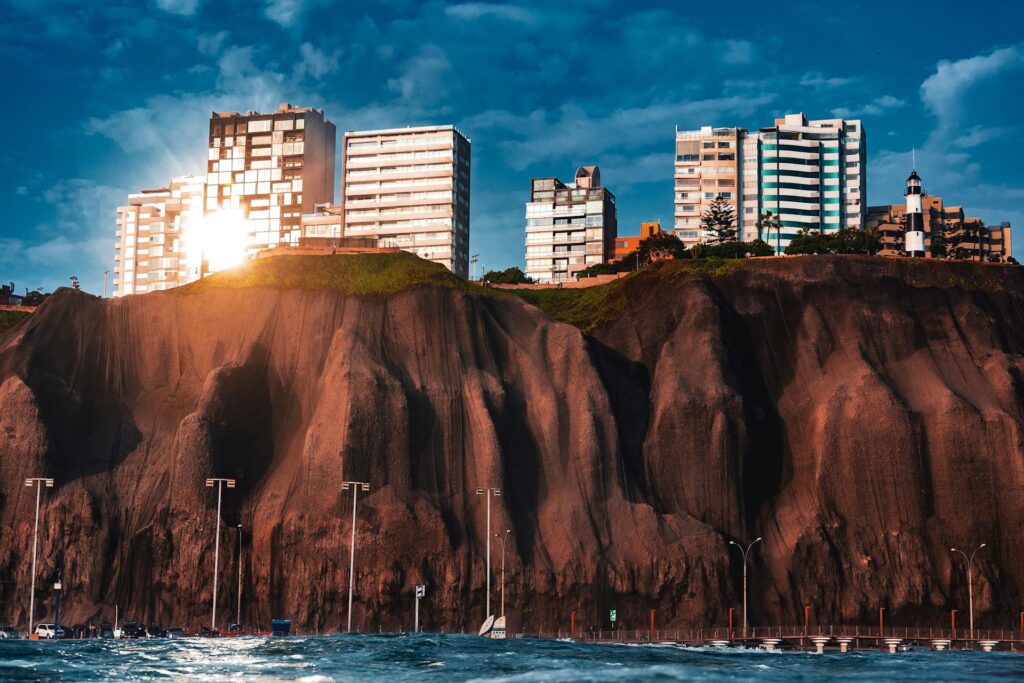
Base scenario. The probability of seeing the announcement of the first branded residence with a confirmed global brand in Lima in the 2027-2029 horizon seems reasonable, conditional on macro stability and on a first developer-brand joint venture closing. Natural candidate zones are the Miraflores cliffside corridor, the Pezet–Country Club corridor in San Isidro, and eventually Las Casuarinas Sur in Surco for low-density large-ticket product. All of this is prospective and should be read as such. [TO BE VERIFIED any specific public announcement that surfaces after this article’s cutoff date.]
What a Lima buyer would seek in a branded residence
The high-net-worth Peruvian buyer who looks at branded residences abroad typically does so out of three combined motivations. One, geographic diversification of the real estate portfolio — owning product in Miami, Madrid, or Buenos Aires alongside Lima. Two, international recognition of the asset, which facilitates eventual liquidation and reduces inheritance friction. Three, access to an integral residential experience with a recognizable seal.
If a branded residence eventually lands in Lima, what the local high-end buyer would probably seek is the same combination applied to his home market. Concretely: product that holds in the secondary market thanks to the brand, operational quality at global standard, and a recognizable seal for the next family generation. For the Peruvian returnee buyer — the executive who lived 15 years in Miami and returns to Lima — a local branded project avoids the dilemma of selling Miami branded product to buy unbranded product in Lima.
The lifestyle driver is secondary but relevant. Hospitality-segment branded residences typically deliver hotel-style services (housekeeping, concierge, room service, valet, spa) that in Lima Top are still hard to access for pure residential product. That value proposition would be a real novelty for the Lima high-end segment. For more context on the international buyer in Lima, see our guide to buying a luxury apartment in Lima from abroad.
Quick facts: branded residences and Lima
- Branded residences confirmed with global brands in Lima as of May 2026: zero.
- Closest approach: commercial alliances like The Grand × Audi.
- Closest consolidated regional hub: Buenos Aires (Trump) and Mexico City (Ritz-Carlton).
- Typical global brand premium over unbranded premium product: 25-40% more per sqm (Knight Frank, Savills).
- Usual entry ticket of global branded residences: US$2-3M+.
- Reasonable probability of first announcement in Lima: 2027-2029 horizon, conditional on macro drivers [PROSPECTIVE].
- Candidate zones: Pezet–Country Club corridor (San Isidro), Miraflores cliffside, Las Casuarinas Sur (Surco).
Frequently asked questions
Are there any global-brand branded residences operating in Lima?
As of May 2026, no. There are no projects in Lima signed by global brands of the Fendi, Armani, Aston Martin, Porsche Design, YOO, Bulgari calibre or hospitality equivalents (Ritz-Carlton, Four Seasons, Mandarin Oriental, Waldorf Astoria, St. Regis) publicly confirmed. If a formal announcement appears after this date, we’ll cover it in an update.
Is The Grand a branded residence?
No, not in the strict sense. The Grand is an Octagon project signed architecturally by Carlos Ott and Carlos Ponce de León with a commercial alliance with Audi. The Audi brand contributes a specific commercial benefit (vehicle included for a tier of units) and marketing narrative, but doesn’t design the tower or define the residential finishes. An authentic branded residence integrates the brand into the residential product itself — Fendi designs the interiors, Aston Martin designs the tower, Porsche Design defines the structural accessories. Different categories.
Why do branded projects price higher?
Three main reasons. One, the name premium: the buyer pays for global brand recognition. Two, the execution quality of the brand standard: finishes, service, common areas at the level of the brand’s flagship hotels or boutiques. Three, secondary-market liquidity: the seal improves resale velocity. Knight Frank and Savills estimate the premium at 25-40% over equivalent unbranded premium product.
Which type of brand would arrive first in Lima?
The most likely scenario is a high-tier hospitality brand before a fashion-luxury brand. Reason: hospitality brands already operate flagship hotels in similar markets and the extension to adjacent residential is operationally more fluid than building a fashion-luxury branded from scratch. Brands like Four Seasons, Ritz-Carlton, Mandarin Oriental, Waldorf Astoria, or Bulgari are the natural candidates. Fashion-luxury (Fendi, Armani) would arrive later.
Where in Lima would a first branded residence land?
Natural candidate zones by high-end buyer density are the Pezet–Country Club corridor in San Isidro (high concentration of high-ticket buyers, proximity to Lima Golf Club), the Miraflores cliffside (Pacific views, mixed tourist-residential demand), and eventually Las Casuarinas Sur in Surco for low-density product. The final choice will depend on the local development partner and land availability.
Is it worth waiting for a branded residence to arrive, or buying premium product now?
Depends on horizon and motivation. If the main motivation is to live or invest in Lima Top today, waiting for a global brand doesn’t make much sense — the realistic horizon is 2027-2029 and not confirmed. The premium product with international architectural signature available today (projects like The Grand or others on the Pezet corridor) does the job well. If the motivation is exclusively to collect the brand seal, it’s worth waiting.
The prospective close
Lima is on its way to having its first branded residence with a global brand, but it doesn’t have one yet. The question isn’t whether it’ll arrive — it’s when, with which brand, on which block, and with which local development partner. Until that happens, the Lima high-end market offers premium product with high execution quality and pointed alliances — The Grand × Audi being the most visible — and the buyer calling from Miami or Madrid can read this Lima universe as a market in transition that will likely see its first branded marker in the 2027-2029 horizon. When that happens, we’ll cover it in these same pages. In the meantime, this piece is the honest read of the market state at this date.
This article is prospective. Information about pipeline projects or eventual brand-developer alliances is sourced from public records and official communications as of May 2026. Specifications, pricing, timelines, and the very existence of branded projects may change or be announced after the publication date. Always confirm current details with the corresponding project sales team or with the global brand. Penthouse.pe does not commercially represent any global brand or Peruvian developer; this article is independent editorial coverage.
Want editorial notice when the first global-brand branded residence is announced in Lima? Email hola@penthouse.pe and we’ll add you to the private update list for Lima Top high-end.